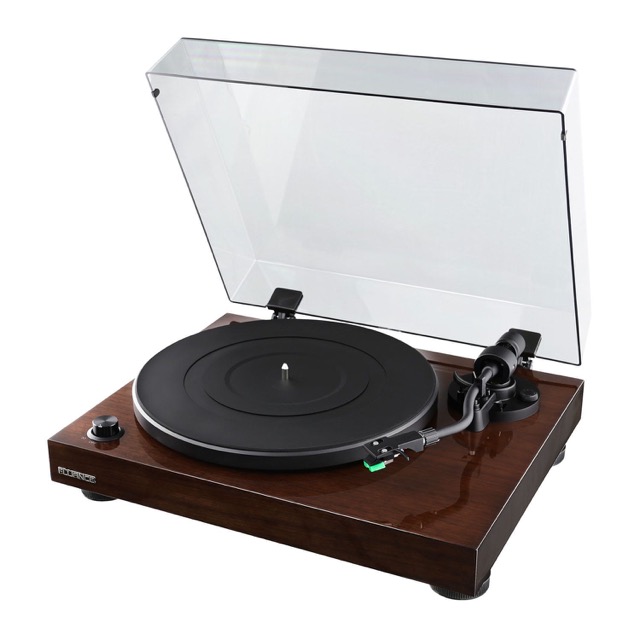
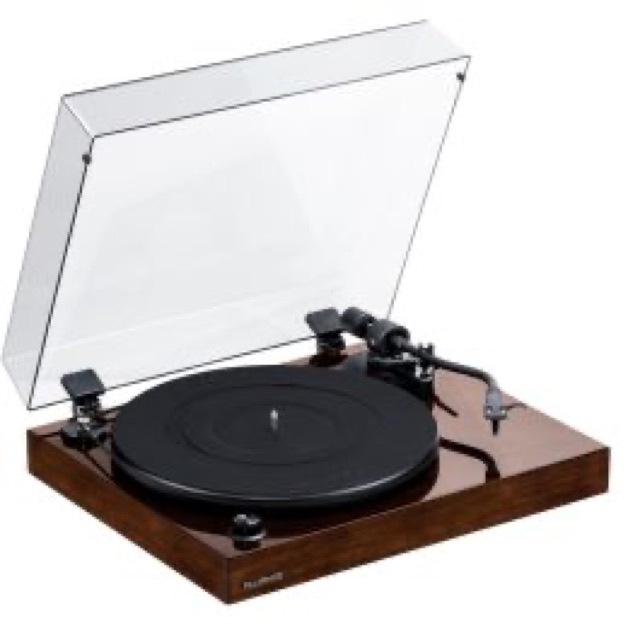
Highlighted cells show a lower reference price, support for more listed speeds, or the presence of a convenience feature. They are not an overall score.
On price alone the Fluance RT81 costs less, coming in $50 (about 14%) below the Fluance RT82.
Both are belt-drive, so that part of the experience should feel similar on either deck: a motor that's mechanically isolated from the platter by an elastic belt, which is the usual route to a quieter noise floor — the default choice across most of hi-fi.
The Fluance RT81 has a built-in phono stage. Skip the phono stage and you'll need one built into your amp, or a separate box, to play through normal speakers.
Operation differs: the Fluance RT81 is manual (auto-stop), the Fluance RT82 is semi-automatic.
Bottom line: these sit in different classes (Budget vs Hi-fi) more than they're direct rivals — pick based on which use case matches what you're after, not the spec sheet alone.
Buying evidence
Reference prices are dated catalogue guides. Live offers are current checks; retailer searches are routes to relevant shops and do not assert stock. Exact internal matching identifiers are not exposed as public product facts without corroboration.
Retailer searches
2 US retailers are listed in our Fluance retailer guide — each outbound link searches the deck on that retailer’s site.
Operation: manual (auto-stop) versus semi-automatic. Cartridge supplied: Audio-Technica AT95E versus Ortofon OM 10. Phono stage: Yes versus No. These are the two displayed models’ recorded specifications. They do not establish sound quality or replacement-part compatibility.